
An immersive multi-device ecosystem.
UX/UI Design · Motion · Academic
The Problem
of U.S. adults suffer from an insomnia disorder
Tompa, 2025 · Kalmbach, 2018
Stress builds throughout the day from environmental influences, and adults with poor sleeping habits need an immersive space to relieve tension mentally and physically. Apollo is a smart home system that manages and optimizes the atmosphere of one's living space through haptics, lighting, sound, temperature, and air quality, designed to improve sleep and reduce stress across a seamless multi-device experience.
The Process
Opportunity Mapping
Used a journey map and component table to identify where devices flow, where users can create routines, override Apollo, view metrics, and interact with the AI.
Boundaries & Continuity
Focused scope on sleep quality and stress reduction. Developed a visual identity system to ensure coherence across all three devices.
AI & Automation
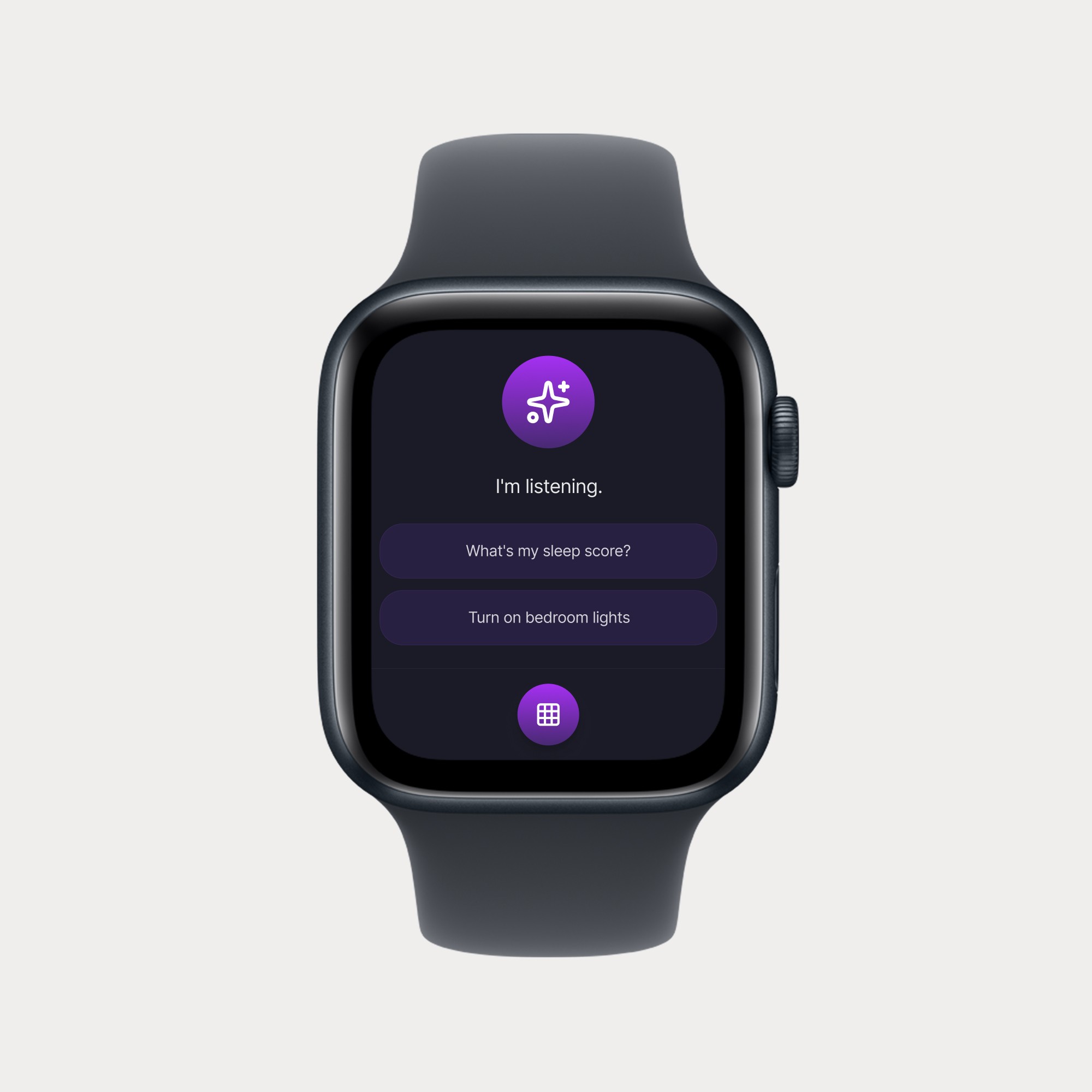
Apollo's AI analyzes biometrics, location, and home environment in real time to learn user behavior, make adjustments, and reduce manual input.
Sketch Exploration
Logo sketches, wireframes across all three devices, and storyboards to map out the ecosystem before moving into Figma, and explore vibe coding.


Ecosystem Journey
The ecosystem journey maps the full experience of a user from the moment they discover Apollo to their daily interactions with the product across all three devices. It traces how the mobile app, smart hub, and watch work together at each stage, showing where devices hand off, where the AI acts, and where the user stays in control.


Components Overview
Apollo is a pod placed near the bedside of the user. It’s the central home system that can act like an alarm with a digital display, a light, a speaker, and an air quality detector integrated. By pairing with smart lights, speakers, a thermostat, and an air purifier, it can enhance and create an immersive space.
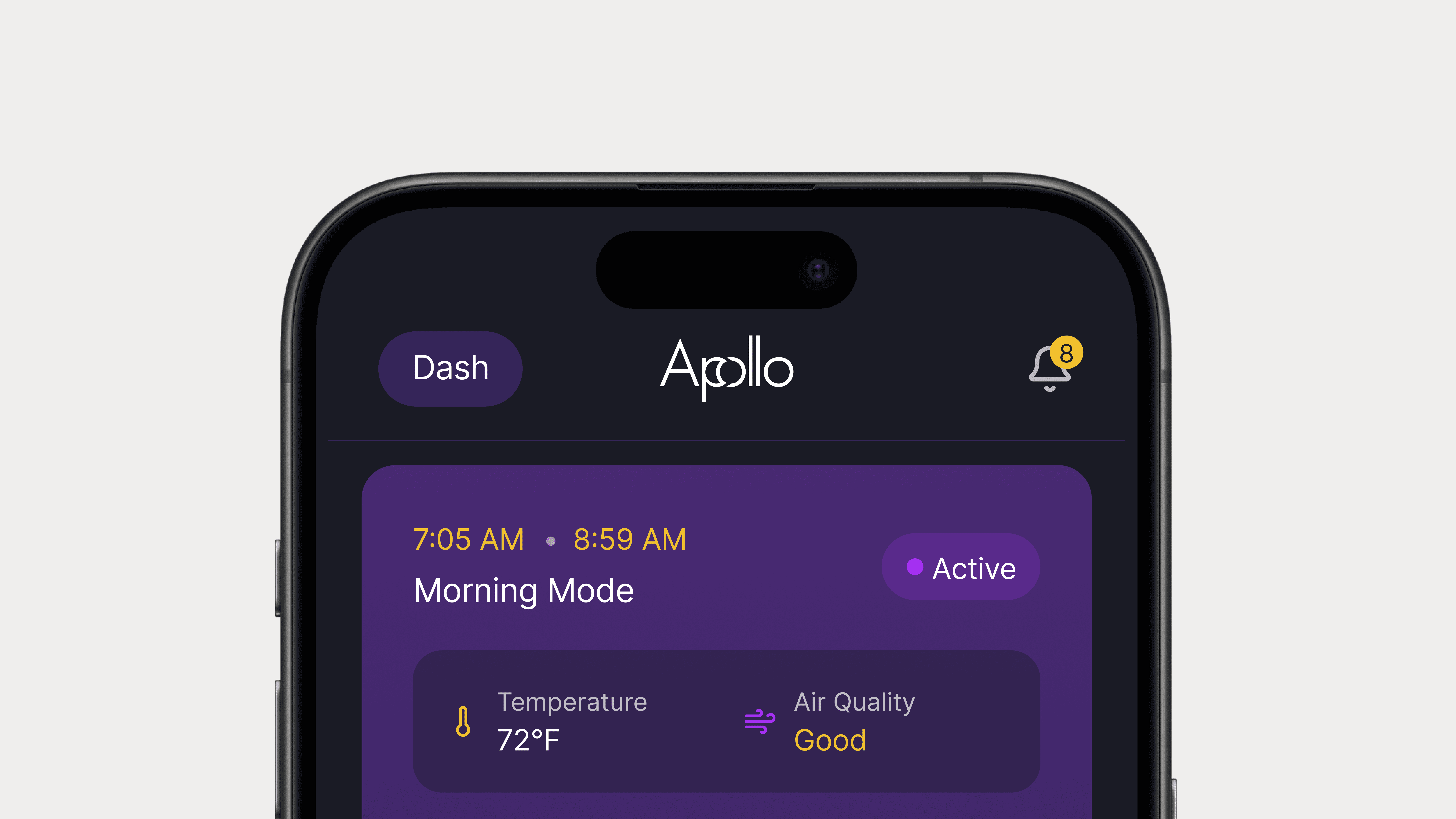
The mobile allows for more in-depth control, a dashboard to view current activities and metrics, a routine section to create and edit modes, a soft-spoken AI agent system to interact with, an activity log of Apollo’s actions, a profile, and settings for privacy and additional control.
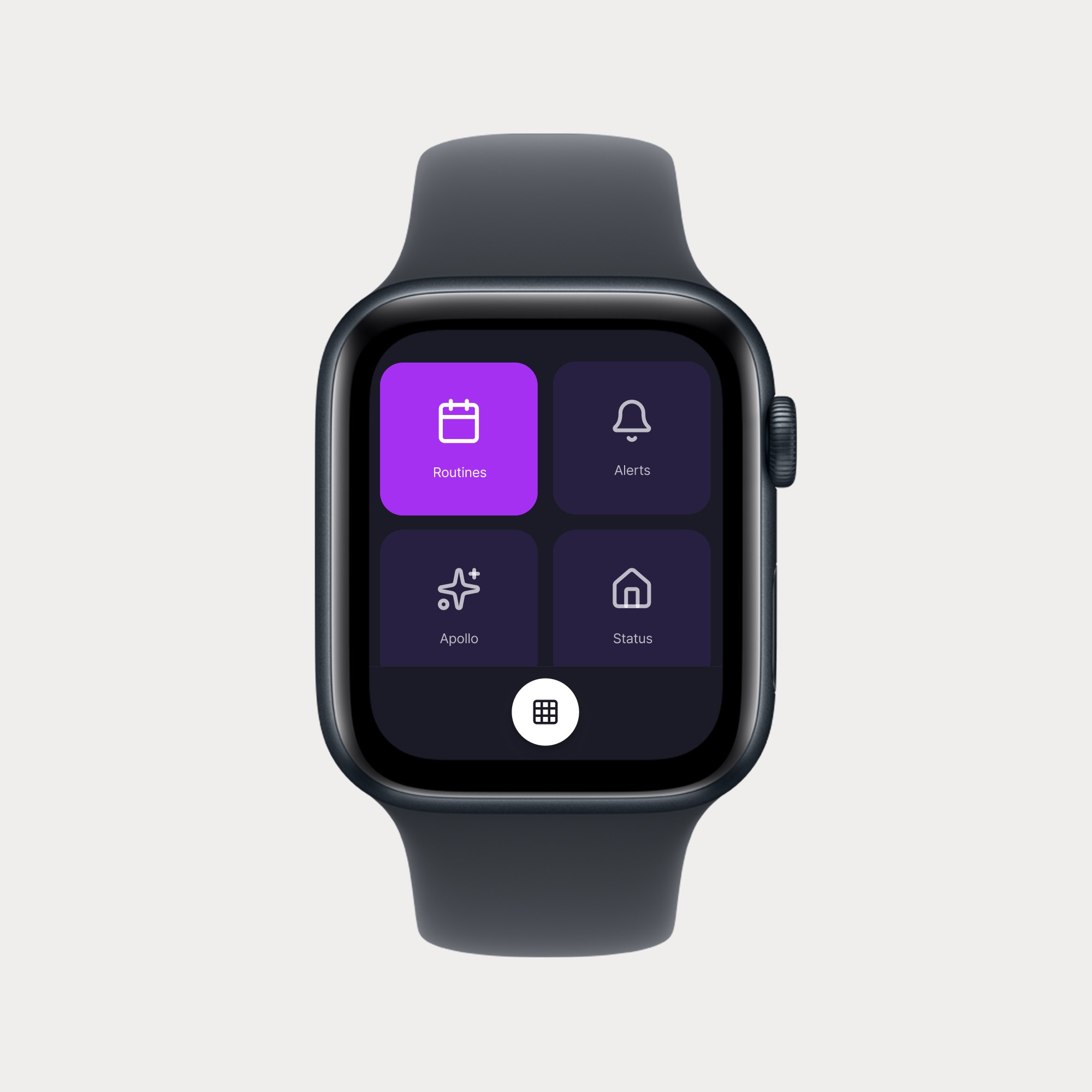
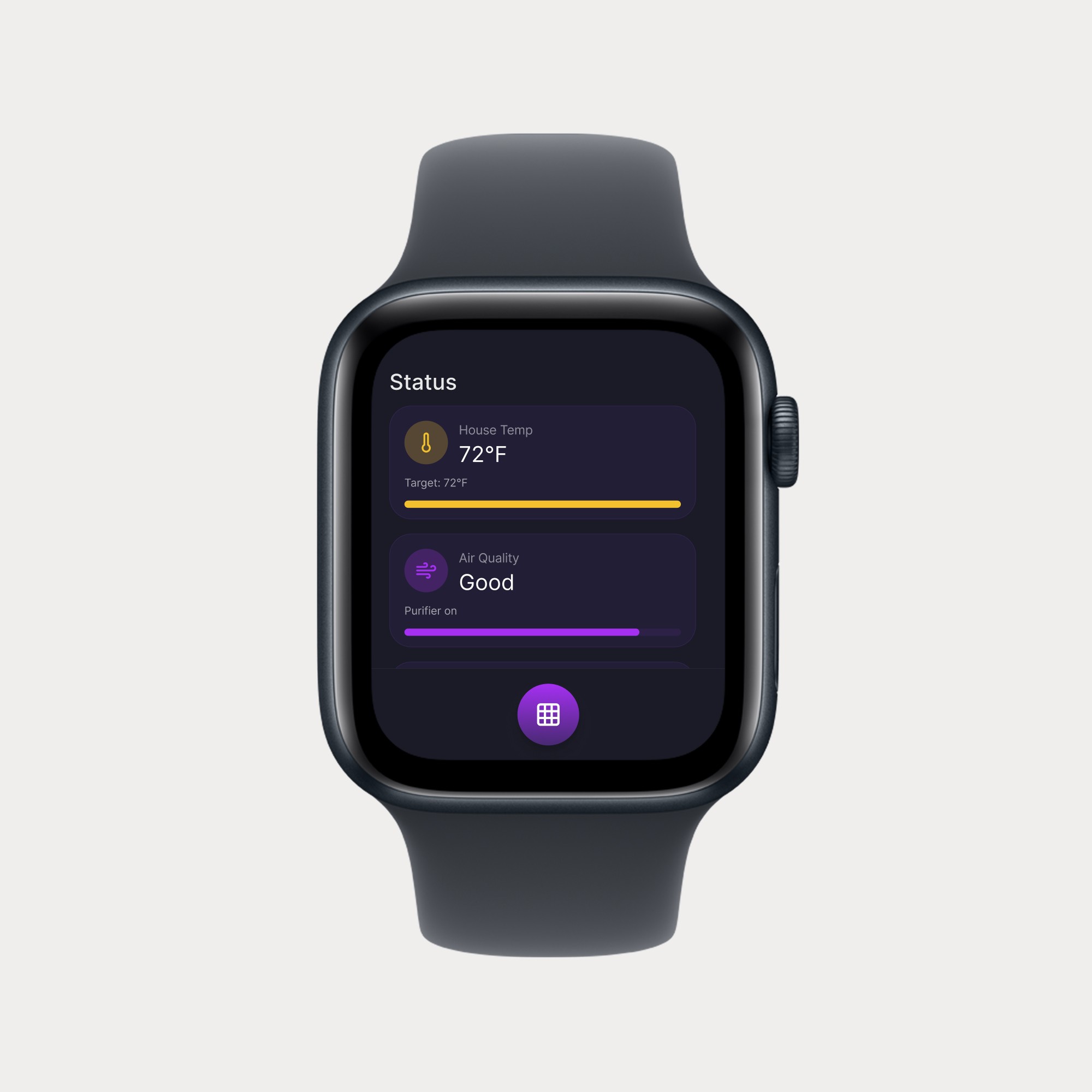
The watch displays similar sections, but in a more condensed form with a greater focus on collecting users’ biometrics for Apollo to adapt and make changes to improve user sleep quality.

The Final Design





Reflection
Consistency Across Devices
Designing across devices requires a coherent UI and careful consideration of how each device interacts and connect with one another.
Apollo's AI
The AI could be more personalized by setting goals and automatically creating routines and modes rather than having the user start from scratch.
Accessibility
The interface built through vibe coding may be easy for many to navigate, but it can be difficult for others. Taking more time to refine UI adaptations like stronger contrast, larger text, and simplified navigation to ensure that the experience works for everyone.
Ethics & Privacy
Collecting biometrics and giving AI control over smart devices raises concerns around privacy, misinformation, and poor predictions. Apollo can be more human-centered by incorporating user feedback and offering human customer support when concerns arise.
A constraint I came across was the reliance on other smart devices, such as lights and speakers, to enhance the experience. One key trade-off is limiting what the main hub can display and do on its own. Apollo has room to grow, particularly in supporting multiple users under one household and adapting when a user’s routine changes completely. Apollo pushed me to think beyond individual screens and consider how an entire ecosystem breathes together. It deepens my understanding of multi-device design and showed me firsthand how AI can be involved to shape the product, its advantages, and disadvantages.

