A digital tool for breast cancer patients.
Figma · Adobe Suite
The Problem
A breast cancer diagnosis does not arrive alone. Beyond treatment, many patients face serious financial and mental health struggles that go largely unaddressed. Finding trusted programs and support that are actually intended for their situation can feel overwhelming, leaving patients and caregivers to navigate an already difficult journey without the help they need.
of patients struggled financially during active treatment
Semin et al., Supportive Care in Cancer, 2020
remained in financial distress after treatment ended
Semin et al., Supportive Care in Cancer, 2020
Beyond finances, many patients experience psychological struggles stemming from prognosis, side effects, fear of recurrence, and lack of support. Research supports the need for therapeutic interventions and community-based support groups to help patients better navigate their journey.

Thesis Question
The Solution
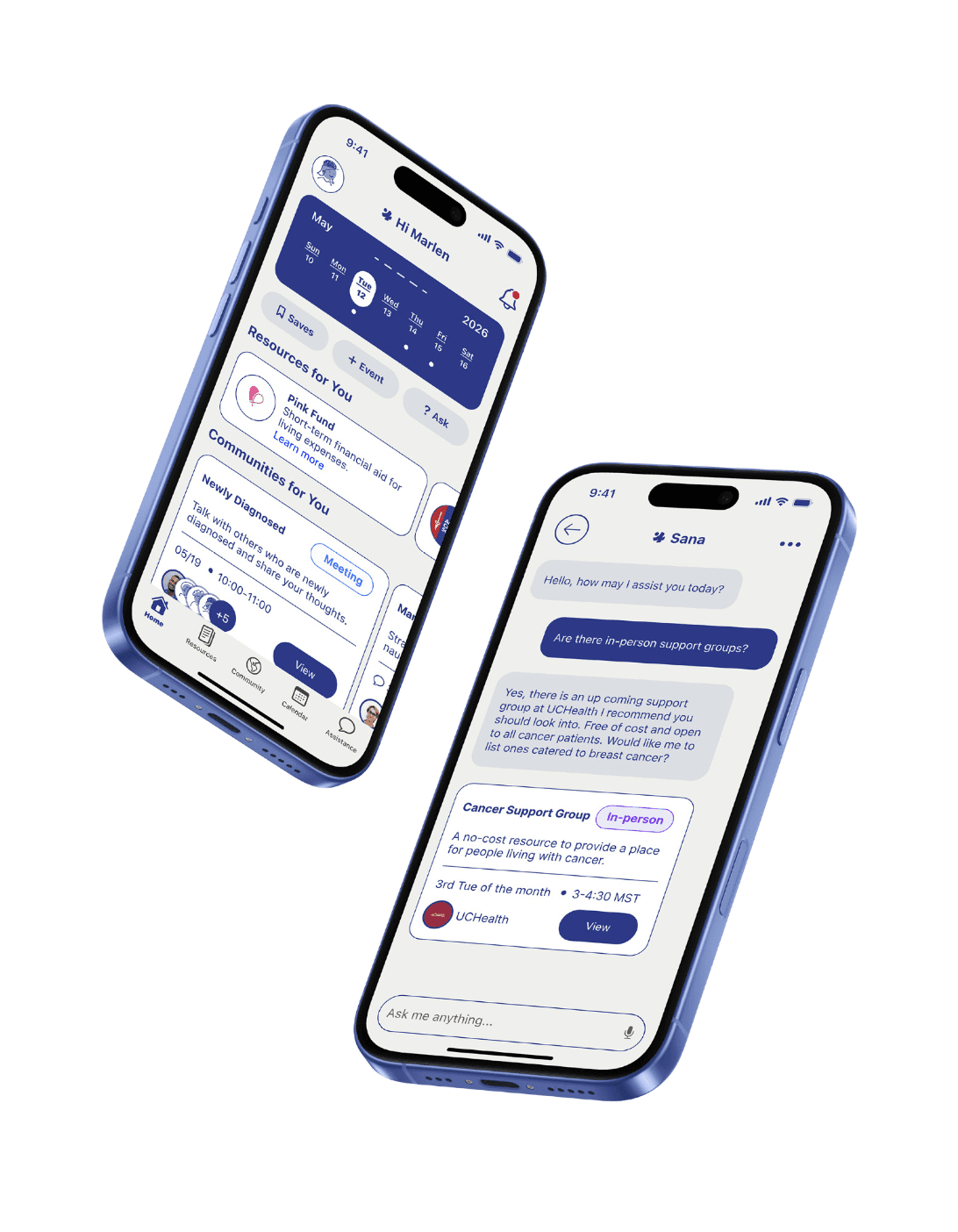
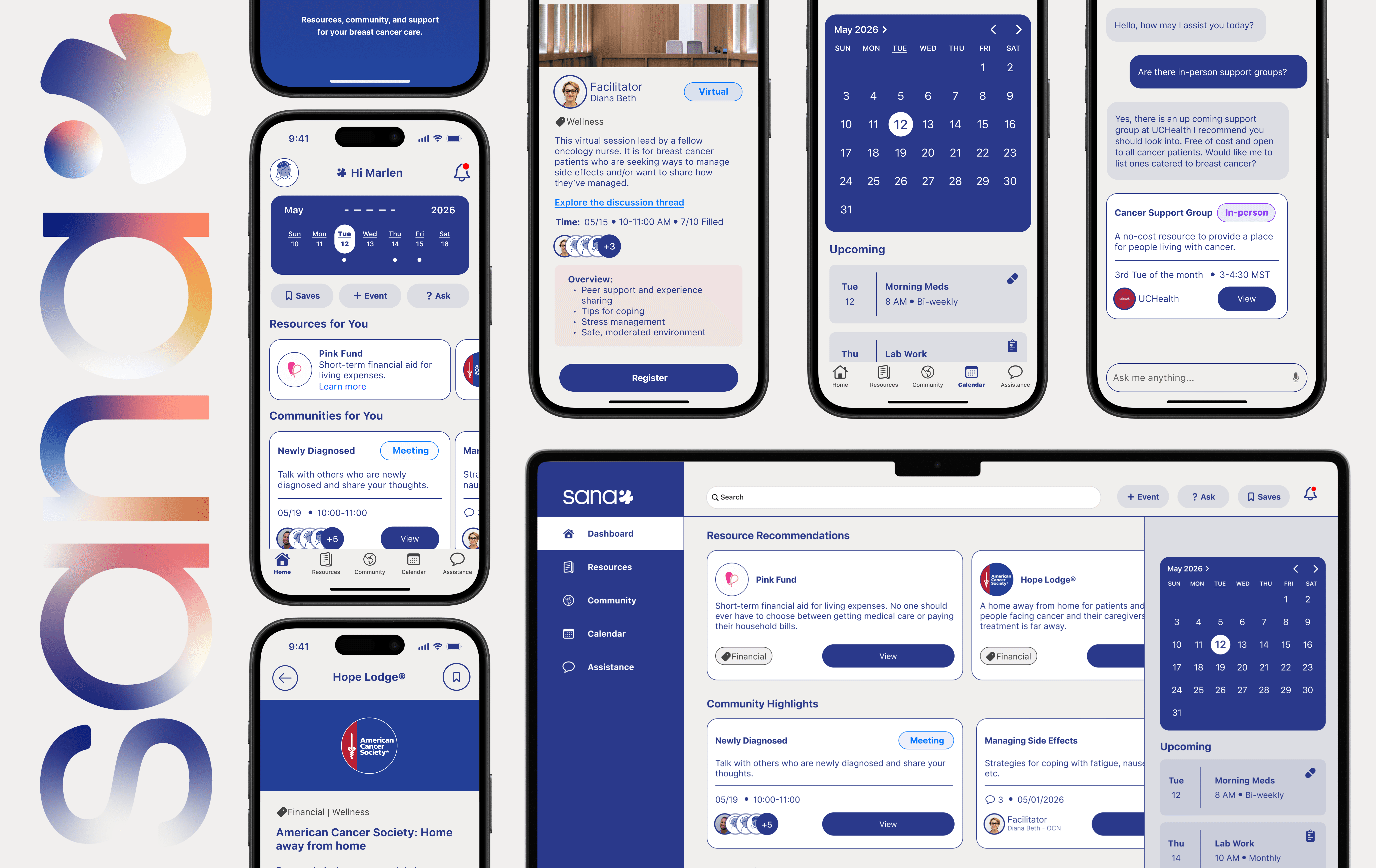
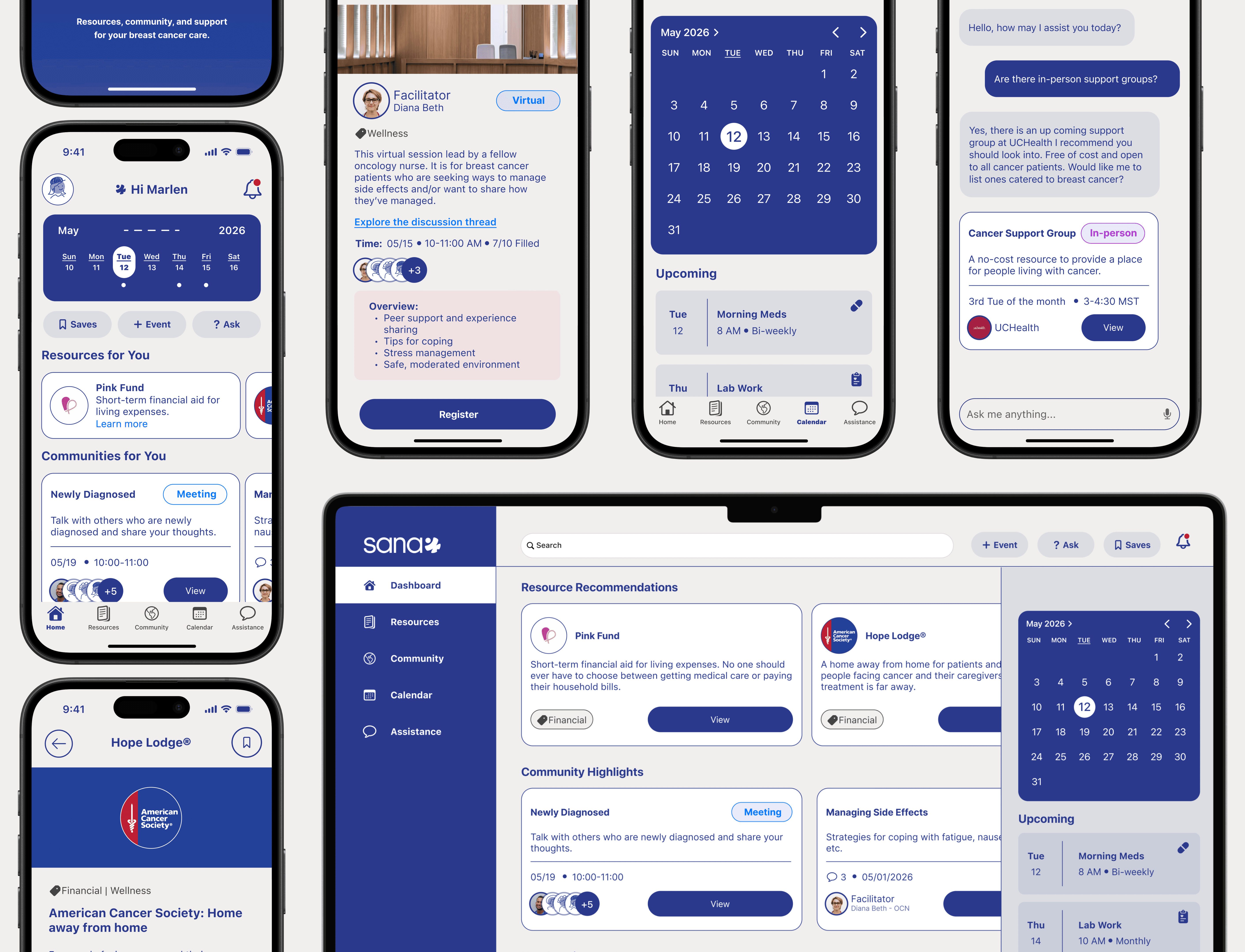
Sana is a concept app designed to help breast cancer patients and caregivers find trusted financial assistance programs, mental health support, and community. It brings together reliable resources from the American Cancer Society and NCCN, moderated communities for secure peer connection, a calendar for planning and organization, and an AI agent that assists with navigation while respecting the ethics of AI in healthcare. A physical care kit extends the experience beyond the screen, encouraging users to join in-person support groups listed from local clinics and hospitals.
Timeline
Sana was developed over two semesters, moving from deep research and discovery in the fall to design, prototyping, and delivery in the spring.

Secondary Research
Research spanned seven areas: financial toxicity, mental health, community and support, assistance programs, patient experiences, healthcare design, and AI in healthcare.
AI is increasingly present in healthcare but requires careful ethical consideration. Research identified five rights for AI in healthcare: the right objective, approach, competency, data, and safeguards.
Nonbinary patients are largely overlooked in BC resources and research, often feeling conflicted, dehumanized, and isolated from support communities. This informed Sana's commitment to inclusive design.
Primary
5 Interviews
"A lot of [resources] are bureaucratic. It's hard under this kind of stress, and cognitive function isn't working."
BC Patient
"I think that there are too many sources and information that are spread out... It gets too difficult to know the source of truth and which one to rely on."
Oncologist
"What's missing is how we identify those families that need to be connected with that support, and letting them know that this resource is out there."
Social Worker
Survey
Mobile Fluency
High comfort with mobile but physical toll of treatment means the app must minimize friction and cognitive load.
Peer Gap
Patients and caregivers have personal support but lack access to peer communities with shared experiences.
AI Openness
Open to AI but uncertain. Requires transparency, human oversight, and clear restrictions on medical advice.
Competitive Analysis
Outcomes4me, Bezzy BC, Apple Health, and OWise were analyzed in depth.
Strengths
Nurse messaging and forums
Health info collection and organization
Glossary lists and daily suggestions
Gaps Identified
Feature overload on first screen
No onboarding or tutorial
Invasive and difficult to navigate
Design Strategy
Through my research, I’ve been able to tackle my assumptions and collect evidence that can back up my reasoning behind Sana, uncover new insights, develop a better understanding, and identify unmet needs among breast cancer patients. I created a brand identity, personas, device rationale, finalized features, user journeys, flowchart, wireframes, and conducted usability testing.


The Final Design


Conclusion
When it comes to security and safety amongst users, there were constraints in better understanding what does and doesn’t fall under HIPAA regulations. The app itself doesn’t collect official records, provide diagnoses, or perform transactions, but it does navigate a sensitive area with healthcare professionals as moderators. If I had more time, I would have liked to work on creating a flow that asks for the user’s consent before sharing anything in a public forum. It was a grey area. Designing a system that isn’t legally bound by hospital regulations, but still implements privacy and safety flows to keep users safe and build trust.
Sana has plenty of room to grow in terms of building trust and transparency. It’s a tool focused on breast cancer patients while remaining inclusive and accessible. Moving through this process allowed me to learn, experiment, and challenge myself in creating an experience that is user-centered and could function if it were to come to life.
I wanted to build a place for community and guidance for those who are dealing with, and have dealt with, breast cancer. Sana is a reminder that design can meet people in some of their hardest moments, and with the right research, intention, and care, it can make a difference, either big or small.